NUTRITION
Cultivating Your Microbiome for Peak Wellness
Your gut is doing far more than helping you digest lunch. Five things researchers are discovering about how your microbiome talks to your muscles, your brain and your training.
Harnessing the Potential of Gut Health
In recent years, the spotlight has turned towards the significance of gut health, and rightfully so. Research has illuminated the pivotal role our gut plays in various facets of our overall well-being. It extends beyond mere digestion, influencing our cardiovascular health, cognitive function, immune response, and even our emotional state.
Within our gut resides a bustling community of trillions of microbes, encompassing approximately 1,000 distinct bacterial species. The delicate balance between beneficial and harmful bacteria in our gut can profoundly affect our health. This article aims to explore the captivating realm of gut health and offer practical strategies to nurture your microbiome.
Understanding the gut microbiome

When most people think about gut health, they think about digestion.
Bloating. Regularity. Fibre. Maybe probiotics.
But your gut is doing far more than helping you digest lunch.
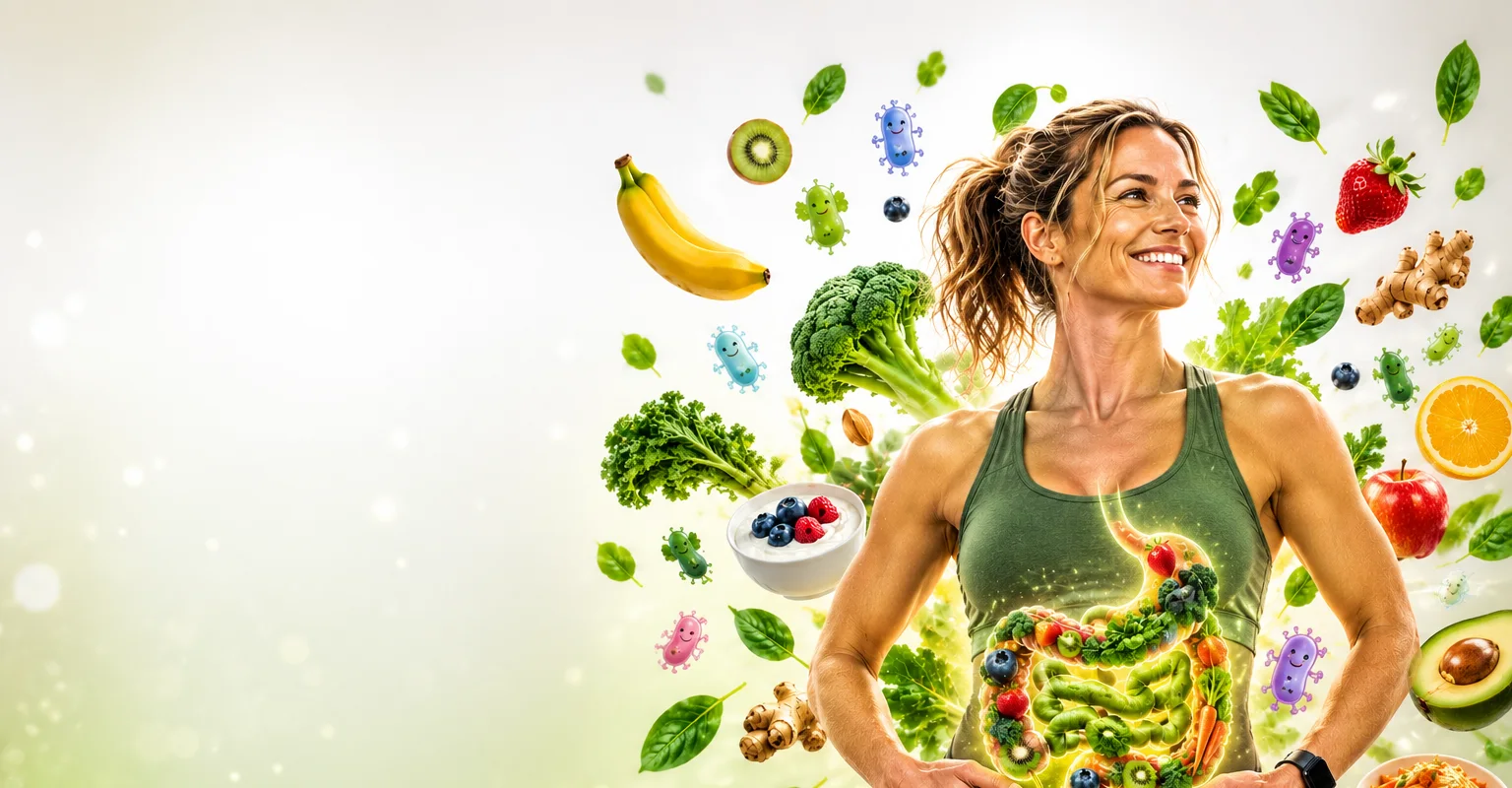
Inside your digestive system lives an enormous community of bacteria and other microorganisms known as your gut microbiome. These microbes are constantly interacting with your immune system, your muscles, your brain and even the way your body responds to exercise and stress.
And the really interesting part?
Your lifestyle can influence them.
The way you eat, move, train, recover and manage stress can all help shape the environment inside your gut.
Here are five fascinating things researchers are discovering about the relationship between your microbiome and the rest of your body.
1. Your muscles and gut bacteria actually help each other
When you exercise hard, your working muscles burn through glucose and produce lactate.
Most of us think of lactate as something associated with tired, burning muscles. But some of the bacteria living in your digestive system may actually make use of it.
Certain anaerobic gut bacteria can consume circulating lactate and help convert it into beneficial short-chain fatty acids, or SCFAs, including butyrate.
“Anaerobic species are typically responsible for producing anti-inflammatory short-chain fatty acids (SCFAs)… SCFA butyrate serves as the primary energy source for colonocytes, enhancing epithelial barrier function.”
Butyrate is particularly interesting because it provides fuel for the cells lining your colon and plays an important role in maintaining a healthy intestinal barrier.
In other words, there appears to be a fascinating two-way relationship.
You exercise. Your muscles produce metabolites. Your microbes respond. And some of the compounds those microbes produce may then support the health of your gut.
Your morning walk or gym session may be doing more for your digestive system than you realise.
2. Hard exercise can temporarily make your gut more permeable
This one sounds alarming at first.
During strenuous exercise, your body prioritises blood flow to the muscles that are doing the work. That means less blood may temporarily reach the digestive system.
This can increase intestinal permeability for a short period of time and may contribute to symptoms such as nausea, cramping or digestive discomfort during intense exercise.
But temporary stress is not necessarily a bad thing.
Your intestinal cells can respond by activating protective mechanisms, including heat shock proteins. Much like exercise challenges your muscles and encourages them to adapt, carefully dosed physical stress may also encourage your intestinal barrier to become more resilient.
The important word here is recovery.
Moderate, appropriately programmed exercise can support gut health. Continually pushing your body hard without enough sleep, nutrition or recovery may have the opposite effect and contribute to inflammation and disturbances in the microbiome.
Challenge your body, then give it what it needs to recover.
More exercise is not automatically better.
3. Exercise can change your microbiome, even without changing your diet
We often talk about food when discussing gut health, and rightly so.
Your gut microbes quite literally eat what you eat.
Fibre, resistant starches and a wide variety of plant foods can provide fuel for beneficial bacteria.
But food is only one piece of the puzzle.
Research suggests that both cardiovascular exercise and resistance training may influence the composition and diversity of your gut microbiome independently of diet.
Physical activity has been associated with changes in microbial diversity and increases in SCFA-producing bacteria such as Roseburia, Bacteroides and Coprococcus.
Research has also linked an active lifestyle with changes in mucosal immunity, amino acid absorption and exposure to metabolic endotoxins. You can explore the research in this systematic review on exercise and gut diversity.
This is one of the reasons I like looking at health as a whole rather than separating everything into little boxes.
Exercise helps nutrition. Nutrition helps recovery. Recovery helps training. And your gut sits right in the middle of much of it.
4. Your gut may influence stress, mood and even motivation
You may have heard people talk about the gut-brain axis.
It sounds like another trendy wellness phrase, but there is some fascinating biology behind it.
Your digestive system and brain are constantly communicating through nerves, hormones, immune signals and microbial metabolites.
Your microbiome also interacts with the hypothalamic-pituitary-adrenal axis, better known as the HPA axis, which plays a major role in your body’s stress response.
When the microbial environment becomes disrupted, signalling through this system may also change, potentially influencing cortisol levels and the way your body responds to stress.
Researchers are even investigating how gut microbes may influence dopamine pathways involved in motivation and perceived effort. You can read more in the research on psychobiotics and gut-brain signals.
Does that mean eating yoghurt will suddenly make you motivated to exercise?
Unfortunately, no.
But it does show how interconnected our bodies really are.
The food you eat does not simply disappear into your stomach. It influences an entire biological ecosystem that communicates with the rest of you.
5. Your gut may even respond to a concussion
Perhaps the most surprising example of the gut-brain connection comes from concussion research.
Because communication between the central nervous system and the enteric nervous system runs in both directions, trauma to the brain may also produce measurable changes in the gut microbiome.
Researchers tracking collegiate athletes during a sports season observed decreases in particular bacterial species, including Eubacterium rectale and Anaerostipes hadrus, following diagnosed concussions.
“Longitudinal investigation of college football athletes across a sports season revealed a decrease in the abundance for two bacterial species… after a diagnosed concussion. These findings underscore the potential of gut microbiota as a diagnostic tool for concussion and other head injuries.”
Researchers are now exploring whether these microbial changes could eventually help provide additional biomarkers for concussion and other neurological injuries.
It is still an emerging area of science, but it shows just how closely connected the brain and digestive system appear to be.
Your gut is doing much more than digesting food
Your microbiome is not simply sitting there waiting for breakfast.
It is constantly responding to what you eat, how much you move, how hard you train, how well you recover and potentially even what is happening inside your brain.
That does not mean you need to obsess over your microbiome or suddenly buy a cupboard full of supplements.
For most of us, the best place to start is much simpler.
Move regularly. Sleep well. Manage your training load. Eat a wide variety of nutritious foods. And give your gut bacteria plenty of the foods they like to eat too.
And that last part is exactly why I put together the MarionPT Healthy Gut Guide & Recipe Manual.
I wanted something practical.
Not another complicated nutrition plan.
Not a list of obscure ingredients you will use once and leave sitting at the back of the pantry.
Just an easy introduction to gut health along with delicious recipes that make it easier to start putting the science into practice.
- Nutrition
- gut health
- wellness