Two claims, not one
The food you choose to eat each day influences not only your physical health but also your mental and emotional wellbeing.
The modern diet is full of manufactured, processed and packaged food — refined sugars, additives, preservatives, flavour enhancers and colours — and it tends to be short on the things your body actually needs.
That’s the case I made when I first wrote this article back in 2011, and I still stand behind it.
But I made a second claim alongside it: that organic food is meaningfully better for you than conventionally grown food. Going back through the research to update this, that one didn’t hold up nearly as well as I expected. So this version separates the two.
The part that is genuinely well supported
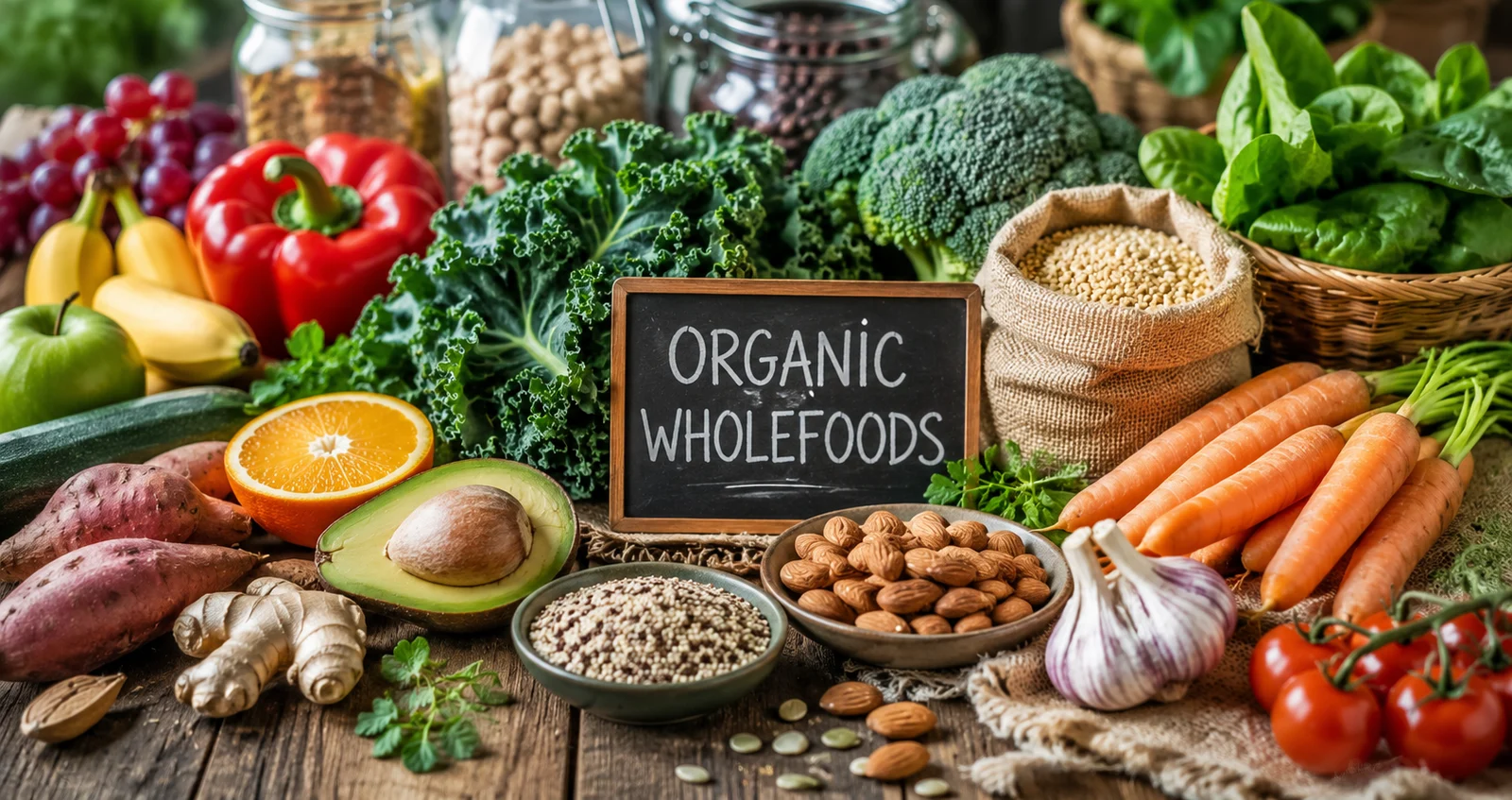
Wholefoods are defined as foods that have been minimally refined or processed and are eaten close to their natural state. In general, nothing much is removed from them, and nothing much is added.
That matters, and the evidence on it has only got stronger since 2011.
A meta-analysis of ultra-processed food consumption found it associated with a higher risk of overweight, obesity, cardiovascular disease, metabolic syndrome and depression (Pagliai et al., 2021). Meanwhile, higher intakes of plant foods are consistently associated with lower risk of cardiovascular disease, cancer and premature death (Aune, 2019).
Plants also give you phytochemicals — compounds plants make to protect themselves, which come along for the ride when you eat them. Like many vitamins and minerals, they don’t survive heavy processing well.
An easy strategy that needs no expertise at all: eat more colours. Green vegetables. Red capsicum. Orange carrots. Berries. Tomatoes. Beans. Leafy greens.
The part I got wrong
Here’s where I have to correct the 2011 version.
I wrote that supermarket produce is “deficient in vital nutrients”, that agricultural chemicals “will end up in your body and can seriously hurt your health”, and that hormones and antibiotics in meat had been “proven to cause serious harm”. Those were strong claims, and I didn’t have the evidence for them.
When researchers have actually compared organic and conventional food:
- A systematic review of the nutritional quality of organic foods found no good evidence of important nutritional differences, and no evidence of health benefits from eating organic (Dangour et al., 2010)
- A large review in Annals of Internal Medicine reached the same conclusion — organic foods are not significantly more nutritious, though they do carry a lower risk of pesticide residue exposure (Smith-Spangler et al., 2013)
So the residue difference is real. Whether it translates into a health difference at the levels found in ordinary food is genuinely unresolved, and I shouldn’t have written as though it were settled.
Wholefood is the part that matters. Organic is a preference, not a prescription.
There are perfectly good reasons to choose organic — farming practices, soil, pesticide use, taste, how you want your money spent. Those are real reasons. They’re just not the same as a proven nutritional advantage, and nobody should feel they’re failing their health by buying the ordinary carrots.
Some breakfasts to get you started
Whichever way you go on the organic question, here are three simple things to make. Use organic ingredients if that’s your preference — they work exactly the same either way.
Make-ahead granola
One of the best breakfasts for busy cooks. Make it ahead and it stores for weeks.
Ingredients
- 4–5 cups oats (not the instant kind)
- ½ cup honey
- ½ cup apple juice
- ½ cup of any of: bran flakes, raisins, coconut, other dried fruit, nuts
- ¼ cup of any of: sunflower seeds, pumpkin seeds, wheat germ
How to make it
Use the honey and apple juice for sweetness and as a binder. You can use less if you like, or leave the honey out entirely if you’re vegan.
Mix all the ingredients together and spread in a thin layer on a baking tray. Bake at 165°C for about 45 minutes, until the oats are golden brown. Allow to cool, break it up and store it in a jar.
Great as a cereal or served with yoghurt. You could even try it over ice cream.
A very good smoothie
Takes less than a minute and there is no strict recipe — find out what your family likes and put that in.
Ingredients
- About 1 cup of ice
- ½ cup milk, or a tub of yoghurt
- 1 banana
- 2 handfuls of other fruit — strawberries, pineapple, peaches, whatever suits
- Optional: honey, wheat germ, protein powder, a slice of silken tofu
How to make it
Add everything to the blender and mix until smooth.
Swap the dairy for fruit juice if you’d rather. This is a template, not a rule.
Banana, almond and cinnamon muffins
Ingredients
- 2 cups wholemeal self-raising flour
- ¼ cup reduced-fat margarine, melted
- 150ml reduced-fat milk
- 1 egg
- 1 tablespoon golden syrup
- 1 ripe banana, mashed
- 70g slivered almonds
- ¼ teaspoon cinnamon
- 30g slivered almonds, to top
How to make it
Preheat the oven to 180°C (160°C fan forced).
Sift the flour into a bowl. Mix the margarine, milk and egg together and add to the flour.
Carefully fold through the golden syrup, mashed banana, almonds and cinnamon. Spoon into muffin trays, filling each about three-quarters, and top with the extra almonds.
Bake for 12–15 minutes, or until golden brown.
So where does that leave you?
Eat mostly food that hasn’t had much done to it. Get plenty of plants, and plenty of different ones. Cook more than you buy ready-made.
That advice is boring, it hasn’t changed in decades, and it’s the part with the evidence behind it.
Then buy organic if you want to, for whatever reason makes sense to you — just don’t let the price of it stop you eating vegetables.
- Nutrition
- organic
- healthy food