No judgment
Have you ever had a really bad day at work? And when it was finally time to go home, all you could think about was how awesome it was going to be to finally sit on the couch … with a bag or bowl of your favorite snack?
No judgment.
Emotional eating is a real “thing” for a lot of us. It only makes sense, because since the day we were born, we’ve used food for more than just our physical nourishment.
Food is an important part of our holidays and celebrations. It can help define our family heritage. And it obviously comforts and nurtures us. So it makes sense that we use it to soothe our emotions when we’re feeling down. Or even “up.”
Being aware of it is a big part of intuitive eating
When you observe your patterns and habits, you can be more intentional in your choices instead of falling back into bad habits and old patterns.
You can actually have control over what you eat, versus it controlling you.
Why do we eat when we feel down?
This is a complicated topic, but negative feelings can leave you feeling empty or disconnected — as if there’s a big hole or void. It’s uncomfortable. So we can eat to try to fill it.
The hallmarks of emotional hunger
- The hunger comes on quickly.
- You are only craving certain kinds of foods.
- You don’t feel full, even if you’ve eaten a lot.
- You feel guilty or have regret later.
Over time, emotional eating can turn into a pattern or habit, so you don’t even know you’re doing it.
Getting a handle on it
If you want to get a handle on your emotional eating, here are some tips.
1. When you feel like eating, ask yourself why
Are you truly hungry, or are you feeling stressed, bored, sad, lonely, or angry?
2. If you’re not physically hungry, shift your mindset
Take a break and do something different: go for a walk, journal, take a bath, reach out to a friend or supportive family member (maybe even make a phone call), or do something creative.
3. Be gentle with yourself
Congratulate yourself on noticing your patterns.
Remember — this is not about “bad” or “good.” It’s about embracing health and listening to your body’s true needs.
The first and biggest tip: slow down
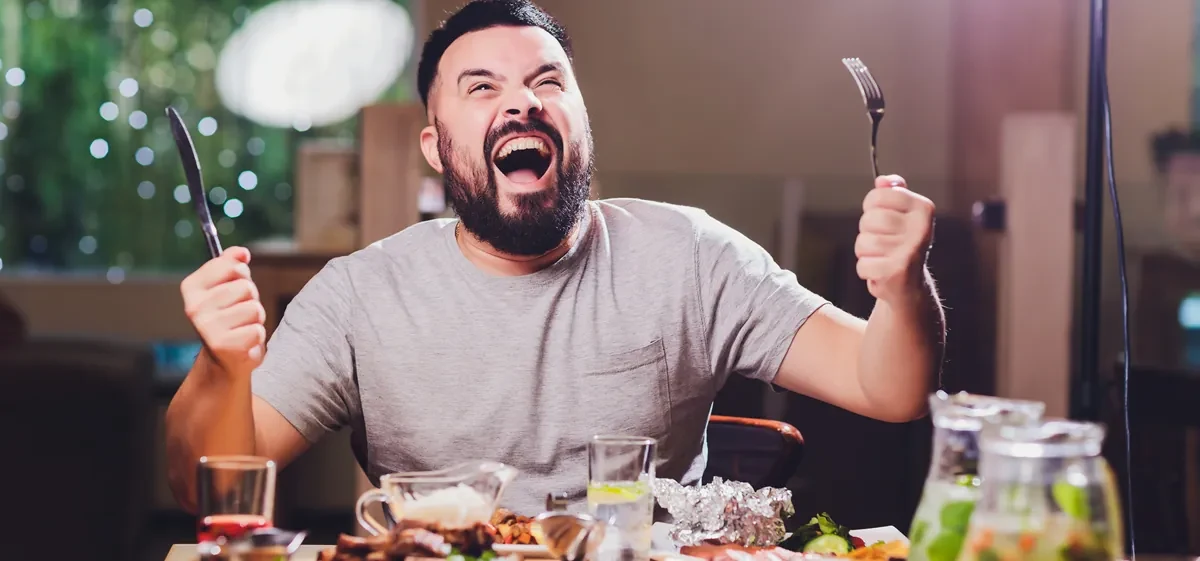
The fact is, a lot of us end up overeating because we eat way too fast.
We have an automatic “shut off” response built into our bodies — but a lot of us override it because we don’t give it time to kick in. That can mean we end up eating more food than we meant to, and more than we need.
Not only do we take in too much food with each bite and eat too fast, but we also don’t chew it enough. This can drag your energy down as your body struggles to digest the excess food. It can also make maintaining your weight a big challenge.
So: slow down. Take small bites, and take the time to taste and enjoy your food.
It takes about 20 minutes for your body to know it's full.
If you’re used to eating fast, it can take some time and energy to switch this up — but to speed up results, sometimes you need to slow down.
Action tips to slow down
- Take a moment before you eat to be grateful for your food.
- Take smaller bites.
- Put your fork down between bites.
- Chew more.
- It’s not a race — slow down while you eat.
- If you want another plate, drink a glass of water, wait 5 minutes, and then decide if you still want it.
That last one matters. If you are tempted to have a second helping, drink a glass of water and wait 5 minutes to see if you still want it. If you’re still hungry, have it.
This isn’t about depriving yourself — in fact it’s just the opposite. It’s about honouring your body by learning to key into its messages, so you can give it exactly what it wants and needs.
Live today with intention.
- emotional eating
- Nutrition