Two push-ups small
Most of us approach a new health goal in almost exactly the same way. We decide that this time we’re going to “get serious,” and suddenly our future selves are living a completely different life. From Monday onwards we’re training four times a week, walking every day, eating perfectly, drinking more water, stretching every morning, and — while we’re at it — finally getting eight hours of sleep. On paper, it sounds like the beginning of a brand-new identity.
The problem is that we’ve also made the starting line feel like a mountain. It’s so big, so demanding, and so far removed from our current routine that part of us quietly decides it might be better to start next week instead. Or next month. Or after things calm down a bit.
The strange story of the two push-ups
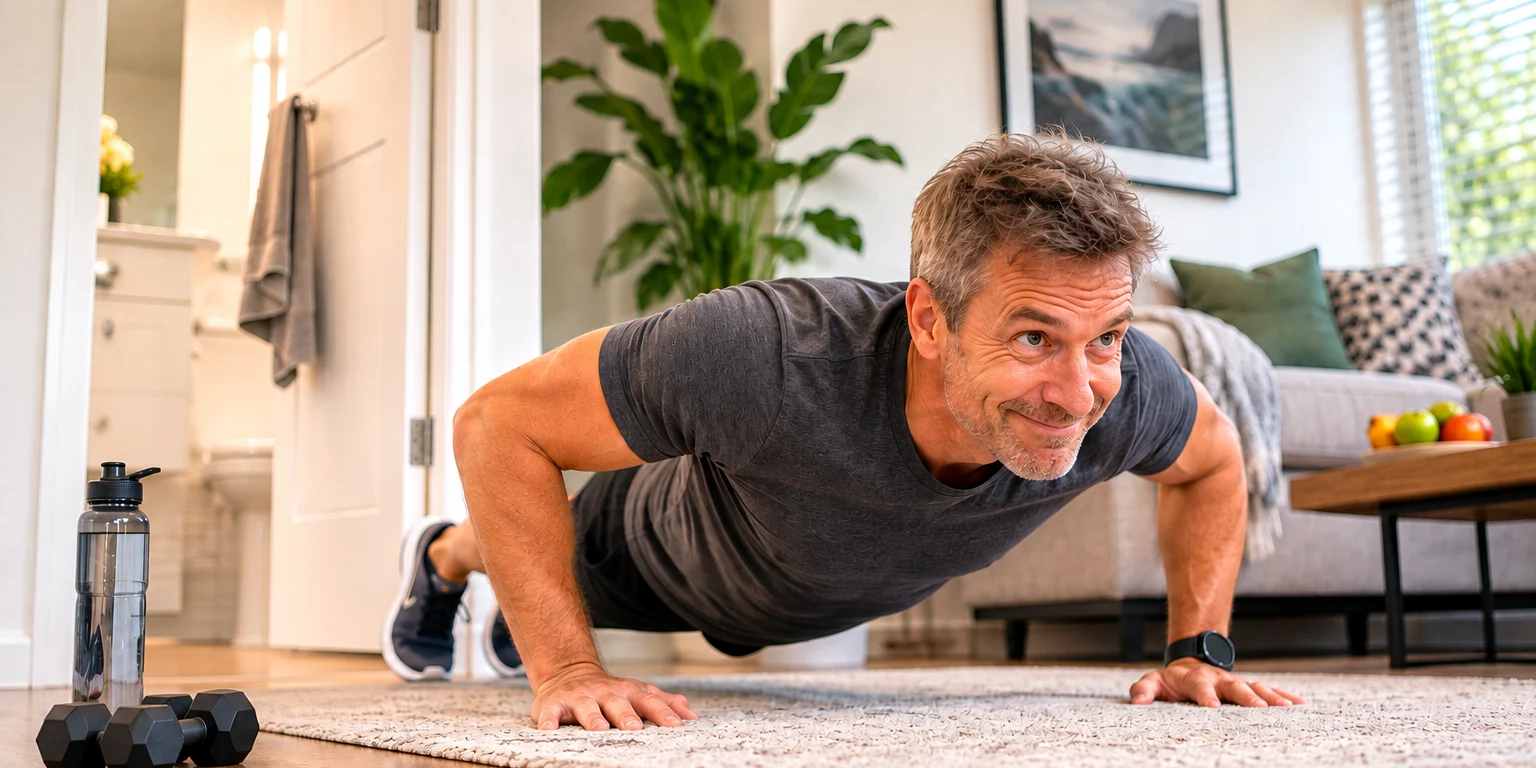
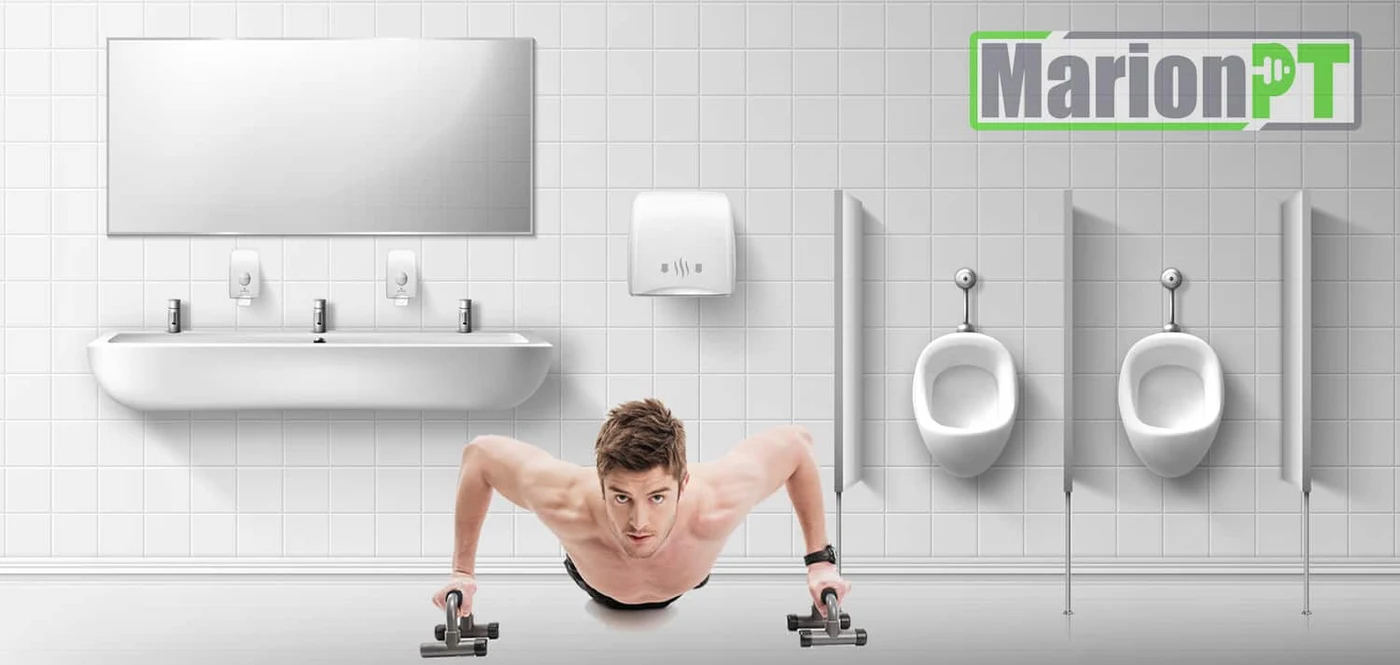
A while ago I came across the work of behavioural scientist BJ Fogg, the founder of Stanford University’s Behavior Design Lab and author of Tiny Habits. One of his most famous personal examples sounds almost like a joke at first. After going to the bathroom, he would do two push-ups. Not fifty. Not a full workout. Just two.
It’s the kind of thing you read twice to make sure you didn’t miss something. But the point isn’t fitness in the traditional sense. Fogg wasn’t trying to build a workout routine out of bathroom breaks. He was doing something much more interesting: he was designing a behaviour so small that it became automatic.
And that’s the real shift. He wasn’t chasing intensity. He was chasing consistency.
Why we keep making habits harder than they need to be
If I told you that from tomorrow you need to exercise for an hour every morning at 6am, your brain would immediately start building a case against it. You’d think about tiredness, early meetings, bad sleep, busy days, and the possibility of starting next week instead. Nothing about that plan feels easy to begin.
Now compare that with something like: after you brush your teeth tomorrow morning, do two squats.
It’s almost laughably simple. And that’s exactly why it works better.
When a behaviour is small enough, it stops feeling like a decision you have to wrestle with. You don’t need motivation, negotiation, or a perfect morning. You just do it. The friction disappears.
Behaviour = Motivation + Ability + Prompt
Something only happens when you want to do it, you’re able to do it, and you’re reminded to do it at the right moment. When those three things line up, behaviour becomes almost inevitable.
Motivation: the unreliable engine
The interesting part is that most of us focus almost entirely on motivation, as if that’s the missing piece. But in reality, motivation is the most unreliable part of the equation.
We all know what we want. We want to feel fitter, stronger, healthier, more energetic. We want to lose weight, reduce pain, or simply feel more comfortable in our own bodies. The intention is rarely the problem.
The problem is that motivation doesn’t stay still. Some days you wake up ready to change your life. Other days, getting out of bed feels like enough of an achievement on its own. Fogg describes motivation as something that naturally rises and falls depending on context, energy, stress, and mood.
So if your entire plan depends on “feeling motivated,” you’re essentially building your habits on shifting sand.
Which is why the smarter question becomes: how do we make the behaviour easier instead?
Ability: making the right thing the easiest thing
This is where everything starts to change. Instead of asking, “How do I force myself to do this?” we ask, “How do I make this so easy I can’t say no?”
Compare “run 5km every morning” with “walk around the block after dinner.” Both are valid forms of movement, but one requires planning, energy, and commitment, while the other requires almost nothing except stepping outside.
Fogg’s approach suggests that when a behaviour is hard, it simply won’t happen consistently. So instead of pushing ourselves to do more, we scale the behaviour down until it becomes almost impossible to fail.
That might look like five squats instead of a full workout, one glass of water instead of a full hydration overhaul, or a five-minute walk instead of a structured exercise plan. The key is that the minimum is so small it feels almost too easy.
Prompt: letting your day do the remembering for you
One of the most powerful parts of Fogg’s idea is the use of prompts. A prompt is simply a cue that tells you, “this is the moment to do the thing.”
The cleverest version of this is attaching a new habit to something you already do without thinking. You don’t need to remember a new routine because your existing routine becomes the reminder.
So instead of trying to “find time to exercise,” you might say:
- After I make my morning coffee, I’ll do five squats.
- After I eat lunch, I’ll walk for five minutes.
- After I brush my teeth, I’ll stretch for a moment.
- After I get home from work, I’ll put my walking shoes on.
Your day becomes the structure that holds the habit in place. You’re no longer relying on memory or willpower. You’re simply stacking something new onto something that already exists.
Why tiny actions can grow into something much bigger
At first glance, two push-ups or five squats don’t look like they could change much. And in isolation, they won’t. That’s not the goal.
The goal is to make starting so easy that it becomes automatic.
Once something becomes automatic, it has a way of expanding on its own. Five minutes can quietly become ten. A short walk can turn into a longer one. A “quick session” at the gym can sometimes grow into a full workout simply because you’re already there and moving.
But importantly, it doesn’t have to grow. The success is not measured by how big it becomes, but by whether it happens at all.
And that removes one of the biggest psychological barriers in health and fitness: the pressure to do it perfectly.
The overlooked power of feeling successful
There’s another subtle but important part of this approach: how you feel after you complete the habit.
Fogg encourages people to acknowledge the win, even in a small way. Not in a dramatic celebration, but in a quiet recognition that you followed through. A simple “good, done” is often enough.
This matters because our brains don’t just learn from repetition — they learn from emotion. If a habit feels like a small success, you’re far more likely to repeat it. If it feels like punishment, you’ll eventually avoid it.
And this is especially important with exercise, which many people have unintentionally associated with guilt, pressure, or self-criticism. Tiny habits help shift that relationship. Instead of exercise being something you “have to suffer through,” it becomes something you successfully complete, even in the smallest possible form.
Try it for yourself: make it almost too easy
If you want to test this idea, start with just one behaviour. Not five. Not a full life overhaul. One.
Then shrink it until it feels almost silly.
- Want to get stronger? Do five squats.
- Want to move more? Walk for five minutes.
- Want better mobility? Do one stretch.
- Want to eat better? Add one piece of fruit to your morning routine.
- Want to start going to the gym? Just book one session.
Then attach it to something you already do every day. After coffee, after brushing your teeth, after dinner — whatever fits naturally.
Stop waiting for motivation to arrive
One of the most freeing ideas in Fogg’s work is this: you don’t need to wait until you feel ready. You don’t need a surge of motivation or a perfect Monday morning. You just need a version of the behaviour that is small enough to begin right now.
Because lasting change rarely starts with a dramatic transformation. More often, it starts with something so small it almost feels insignificant.
Two push-ups. Five squats. A short walk. One better choice.
And then another. And another.
Until one day, what once felt like effort becomes something you simply do without thinking.
So don’t underestimate the tiny stuff. Given enough repetition, it has a way of becoming something much bigger than it first appears.
- habits
- mindset
- getting started